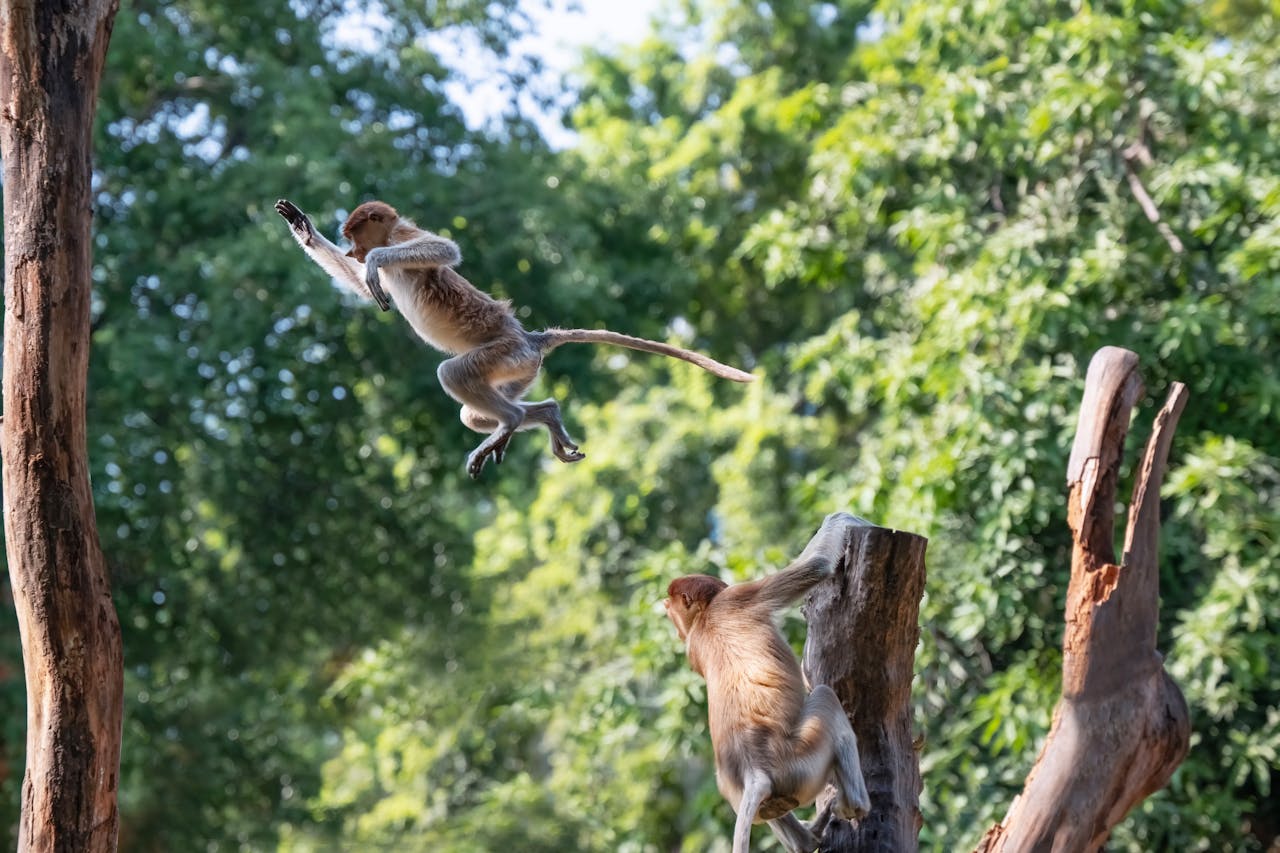
Borneo holds a distinct position in the natural world as the only place where you can find the proboscis monkey in the wild. With their pendulous noses and pot-bellied physiques, these primates are instantly recognizable and serve as a major draw for wildlife enthusiasts visiting the island. While their comical appearance often grabs headlines, observing these animals in their natural mangrove habitat offers a rare glimpse into a specialized ecosystem. This guide provides the practical information required to respectfully observe and photograph these fascinating creatures during your travels.
Best Locations for Sighting Proboscis Monkeys
To spot these primates, you need to know exactly where to look. Proboscis monkeys are arboreal, rarely leaving the safety of riverine forests and coastal mangroves. Bako National Park in Sarawak is one of the most accessible locations; while trails offer a chance to see them, the mangroves at low tide provide the clearest views.
In Sabah, the Kinabatangan River offers a different experience. Boat safaris allow you to cover more ground than trekking, and since these monkeys often sleep in trees overhanging the river to avoid predators like clouded leopards, sightings are frequent. If you prefer a managed environment where sightings are guaranteed during feeding times, the Labuk Bay Proboscis Monkey Sanctuary is an excellent choice.
Timing is just as important as location. You should plan your visits for the early morning or late afternoon when temperatures are cooler. During the midday heat, the monkeys retreat deep into the canopy shade, making them difficult to spot.
Photography Essentials for the Rainforest
Photographing wildlife in Borneo presents specific challenges due to the dense canopy and varying light conditions. You will need a telephoto lens to capture clear images of proboscis monkeys, as they often perch high in the trees. A lens with a focal length of at least 300mm is necessary to frame the animal without disturbing it.
Lighting is often poor in the mangroves, which means you must be comfortable adjusting your camera’s ISO settings. You may need to increase your ISO to maintain a fast enough shutter speed to freeze the movement of the monkeys as they leap between branches. A fast shutter speed is critical, as these animals are surprisingly agile despite their bulky appearance. Focus on the eyes or the distinctive nose to create an engaging portrait.
Cultural Significance and Conservation
Local communities in Borneo sometimes refer to the proboscis monkey as “Orang Belanda,” or “Dutchman,” a playful jab at the Dutch colonizers who were perceived to have similar large noses and large bellies. Beyond this cultural connection, these monkeys play a vital role in the health of the mangrove ecosystems. As they travel and feed, they help disperse seeds, supporting the regeneration of the forests they call home.
However, the species faces significant threats. Rapid deforestation for palm oil plantations and logging has severely reduced their habitat, fragmenting populations and isolating troops. The destruction of mangroves also removes their primary food source and sleeping quarters, forcing them into smaller areas where competition for resources is fierce.
Responsible Tourism and Protection
Seeing a proboscis monkey in the wild is a privilege that comes with responsibility. By choosing eco-friendly tour operators who prioritize animal welfare and adhere to distance guidelines, you contribute to the economic viability of keeping these forests standing. Your visit helps demonstrate that living primates are more valuable to the local economy than timber or palm oil. Supporting conservation initiatives and visiting established national parks ensures that future generations will also have the chance to witness these remarkable primates swinging through the mangroves of Borneo.